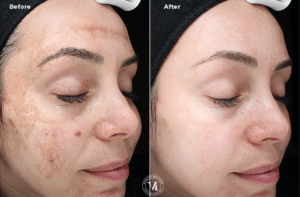
We all age, it is an inevitable fact of life. As the aging process progresses, we will experience bone loss in the face leading to retracted jawline and loss of the beautiful high cheekbones and the slender elongated face we all strive to achieve. Facial muscles will begin to decrease leading to reduced volume and elasticity, and loss in facial fat pads further emphasizing signs of aging. To simplify, bones, muscles and fat act as the scaffolding under the skin, when this loss occurs, we begin to see wrinkles, sagging and loose the youth we once knew.
Dermal fillers are a great choice as a minimally invasive option. Medical professionals inject hyaluronic dermal filler via needle or cannula, which help to smooth lines and replenish lost volume, restoring a more youthful appearance. Dermal filler is comprised of a variety of substances, naturally occurring as well as synthetic. The most common compound used in dermal fillers is hyaluronic acid (HA). HA is found naturally in our body and is the key to keeping our skin hydrated and volumized. “HA can bind up to 1000 times its weight in water. It functions as a humectant and holds water molecules onto the surface of your skin to keep it hydrated”(1). Depending on their specific chemical makeup, dermal fillers can last anywhere from 6-24 months before being gradually absorbed by the body.
HA filler is the most commonly used soft-tissue filler. Its popularity is due to the vast array of products available, ease of use, low overall complication profile, and reversibility.
There are several types of dermal fillers on the market all with pros and cons. It is important to understand these differences and make a decision that is right for you. With the assistance of your provider, you can work together to determine which filler is right for you. Dermal fillers do come with risks, if accidentally injected into a blood vessel it can cause a vascular occlusion (VO). This means product was injected into a blood vessel, blocking blood flow. Lack of blood flow to the tissue will eventually lead to necrosis (skin death). Hyaluronic acid fillers have the ability to be reversed with hyaluronidases. Hyaluronidase, aka hylenex, is a composition of enzymes that are able to degrade and dissolve hyaluronic acid.
One of the most common and widely used filler is hyaluronic acid (HA) fillers. HA is a substance that our body produces naturally hence its exceptionally natural appearance. Results are immediate, thus their popularity. HA filler is generally considered safe in the sense it can be dissolved by hyaluronidase in case of a VO or if the person dislikes the appearance. As previously stated, hyaluronidase can degrade hyaluronic acid, and is used to reverse the effects of HA filler injections. Hyaluronidase can be used dissolve subcutaneous nodules, correct excessive quantities of injected filler, eliminate migrated filler, and resolve VO’s. Knowledge of use, methods of application, and adverse effects of hyaluronidase is essential for the medical practitioner. Another benefit of HA filler is they are premixed with lidocaine, a numbing agent, to maximize comfort during treatment.
Poly-L-lactic acid (PLLA) is another semi-permanent, synthetic, filler that helps to stimulate collagen production. This filler is unique from other fillers in that results are gradual; results are achieved over several months as the body is stimulated to produce collagen. “PLLA is a biocompatible, biodegradable, immunologically inert synthetic polymer that stimulates collagen synthesis, leading to gradual volume re-establishment” (3). These results are achieved via the hosts response to this process as opposed to the product itself. It is important to note hyaluronidase is not effective on these types of filler, therefore making it impossible to reverse these products and would pose great challenges should there be an adverse event.
There are other available fillers, however, they are not as frequently used and will not be discussed in this blog post.
Dermal filler procedures can be expensive, which has prompted some consumers to turn to the online black market to purchase do-it-yourself fillers. “Since 2020, there have been multiple reports in media outlets and in the medical literature of dangerous complications resulting from self-injection of fillers by non-medical professionals” (3). To be very clear, this is not a do-it-yourself area of medicine that one should attempt to do themselves. “One major risk is that fillers purchased online can contain a variety of non-sterile substances, such as hair gel. When injected, these substances can cause allergic reactions, infections, VO’s, and embolisms leading to blindness” (3). Without proper training, knowledge, and reversal products on hand this can have severe consequences.
We have established dermal fillers can be safe when injected by trained medical professionals. It is your responsibility as a consumer to do your due diligence. It is encouraged to know your provider and establish they have medical training, educate yourself, ask question, and be sure they have hyaluronidase readily available in case of an adverse event. Dermal fillers are a great solution to slowing down the aging process and can be done safely and effectively with the right medical provider.
References
- Wilson Ph.D, MSN, RN, D. (2019). Why Science Says Hyaluronic Acid is the Holy Grail to Wrinkle-Free, Youthful Hydration. https://www.healthline.com/health/beauty-skin-care/hyaluronic-acid#benefits
- Rohrich MD, R., Bartlett MD, E., & Dayan MD, E. (2019). Practical Approach and Safety of Hyaluronic Acid Fillers. International Open Access Journal of the American Society of Plastic Surgeons. https://www.ncbi.nlm.nih.gov/pmc/articles/PMC6635180/
Liu MD,MHS, Kristina. (2020). Dermal fillers: The good, the bad and the dangerous. Harvard Health Publishing. https://www.health.harvard.edu/blog/dermal-fillers-the-good-the-bad-and-the-dangerous-201907152561