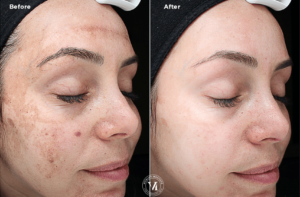
Choosing an aesthetic injector is about much more than finding someone who’s before and after photos you like.
Botox, Dysport, dermal fillers and other injectable treatments are medical procedures. They involve prescription medications, facial anatomy, blood vessels, nerves, and the possibility – although uncommon – of complications; the person holding the syringe matters.
And if you live in Colorado, there is something you may not realize…
The person performing your injections is not necessarily a licensed healthcare provider, and this is 100% legal.
1. Understand Colorado’s Rules
Colorado’s regulations surrounding medical aesthetics may surprise or even shock patients.
Colorado defines medical aesthetic services as medical services that constitute the practice of medicine, including injections of substances into the body. However, under Colorado’s delegation framework, certain medical aesthetic services may be delegated by an appropriately licensed medical professional to an individual who is not a licensed healthcare provider. 1 2
That means the person performing your cosmetic injections may have a medical license, but they may not.
In 2025, Colorado went a step further and passed legislation requiring additional disclosure when medical aesthetic services are delegated to someone who is not a licensed healthcare provider. Among other requirements, patients must be informed that they are receiving medical aesthetic services delegated to an unlicensed individual. 3.
Which is to say, when you schedule an appointment with a provider who is not medically licensed, you must be told your injector does not hold a medical license. The question is, is this actually happening?
The takeaway isn’t that one provider is automatically good or bad because of a title. It’s that patients need to know exactly who is treating them. And when patients do their due diligence, they may be surprised to find that their Injector is not medically licensed, meaning a registered nurse, a nurse practitioner, a physician’s assistant, etc. In fact, many injectors in the state of Colorado are licensed aestheticians, and this is all perfectly legal and determined by the state of Colorado.
2. Ask What License Your Injector Actually Holds
“Aesthetic Injector” is not a medical license
“Master Injector” is not a medical license
“Medical Aesthetician” is not a medical license
They are all nothing more than it made up titles.
Before allowing someone to inject you, ask:
- What is your professional license?
- Are you a licensed healthcare provider in Colorado?
- What medical education and training did you complete before entering aesthetics?
- How long have you been performing injectable treatments?
There is an important difference between training to perform a cosmetic procedure and having an education and professional license centred around caring for patients.
Colorado has recognized the importance of this distinction as of June 1, 2006. The state’s Know Your Healthcare Practitioner Act requires covered healthcare practitioners to identify the type of state-issued license, certificate or registration they hold when advertising healthcare services using their name. 4
As a patient, you have every right to know the credentials of the person treating you.
3. Don’t Confuse a Training Certificate with Medical Licensure
Injectors frequently complete advanced courses, certifications, and hands-on aesthetic training. Those can be extremely valuable—but they aren’t interchangeable with a professional healthcare license.
A weekend course, manufacturer training or aesthetic certification tells you someone completed that particular training only.
A medical or nursing license represents a much broader foundation of patient assessment, anatomy, physiology, pharmacology, infection prevention, recognizing adverse reactions and responding when something doesn’t go according to plan.
Both a strong medical foundation AND an extensive aesthetic license with specific training and experience are the gold standard.
4. Ask About Experience, Not Just Credentials
A medical license alone does not make someone an excellent injector either.
A provider can be highly qualified medically and still have very little experience performing aesthetic injections.
Ask how long the provider has been injecting, and whether aesthetics is a primary part of their practice.
Someone who performs injectables occasionally has a very different level of day-to-day experience than someone who has spent years focusing specifically on aesthetic medicine. For example, a plastic surgeon’s area of expertise is to perform plastic surgery. They likely do not perform Botox or fillers on a regular daily basis.
5. Look Beyond the Before and After Photos
Beautiful Instagram photos are great, but they shouldn’t be your only qualification. Look at the provider’s overall philosophy. Do they evaluate your individual anatomy? Do they explain why they recommend—or don’t recommend a treatment? Are they willing to tell you no? Do the results consistently look natural?
A trustworthy injector isn’t trying to sell you the largest syringe or the greatest number of units. Sometimes the best recommendation is less treatment. Sometimes it’s a different treatment. And sometimes it’s no treatment at all.
6. Ask What Happens if Something Goes Wrong
Complications from aesthetic injections aren’t common, but no medical procedure is completely without risk. Your injector should know how to recognize a complication quickly, have an established protocol for managing it and be able to explain what happens if you experience a problem after leaving the office. This is one of the reasons a provider’s medical background matters. You’re not simply choosing someone based on how well they place Botox or filler when everything goes perfectly. You’re also choosing the person you want caring for you when something doesn’t.
7. Do Your Due Diligence
Aesthetic medicine has become incredibly accessible, which gives patients more choices than ever. But more choices also mean patients need to ask more questions. Before choosing an injector, research their professional background. Verify their license when applicable. Ask about their education, aesthetic training, and years of experience. Find out whether the person actually performing your treatment as a licensed healthcare provider (RN, NP, etc.) or is merely performing medical aesthetic services through delegation.
Don’t feel uncomfortable asking.
It’s your face. It’s your health. And you deserve to know exactly whose hands you’re putting them in.
My Approach
I’m a Colorado-licensed registered nurse (RN) and a licensed aesthetician, and I have specialized in aesthetic injections for more than seven years. My approach has always been simple: natural results, honest recommendations and never overdone.
I believe patients should understand not only what treatment they’re receiving, but who is providing it and why they’re qualified to do so.
Credentials aren’t the only thing that makes a great injector, but when you’re choosing someone to perform a medical procedure, they’re an important place to start.
Sources
- Colorado Medical Board, Rules and Regulations – Medical-Aesthetic Services, 3 CCR 713-30B.
- Colorado Department of Regulatory Agencies, Division of Professions and Occupations.
- Colorado General Assembly, HB25-1024, Medical-Aesthetic Services Delegation Disclosures, effective August 6, 2025.
- Colorado General Assembly, SB25-152, Know Your Health-Care Practitioner Act, identification requirements effective June 1, 2026.